Proxy the complete deck, test its setup and recovery under controlled conditions, and learn which parts of a new Pokémon TCG archetype are worth buying.


Proxy the complete deck, test its setup and recovery under controlled conditions, and learn which parts of a new Pokémon TCG archetype are worth buying.

A practical guide to recreating one Pokémon expansion as a reusable draft environment, including card counts, rarity simulation, Evolution support, Energy, and proxies.

A practical checklist for labeling, sleeving, organizing, and disclosing unofficial Pokémon TCG playtest cards so they are not confused with authentic cards.
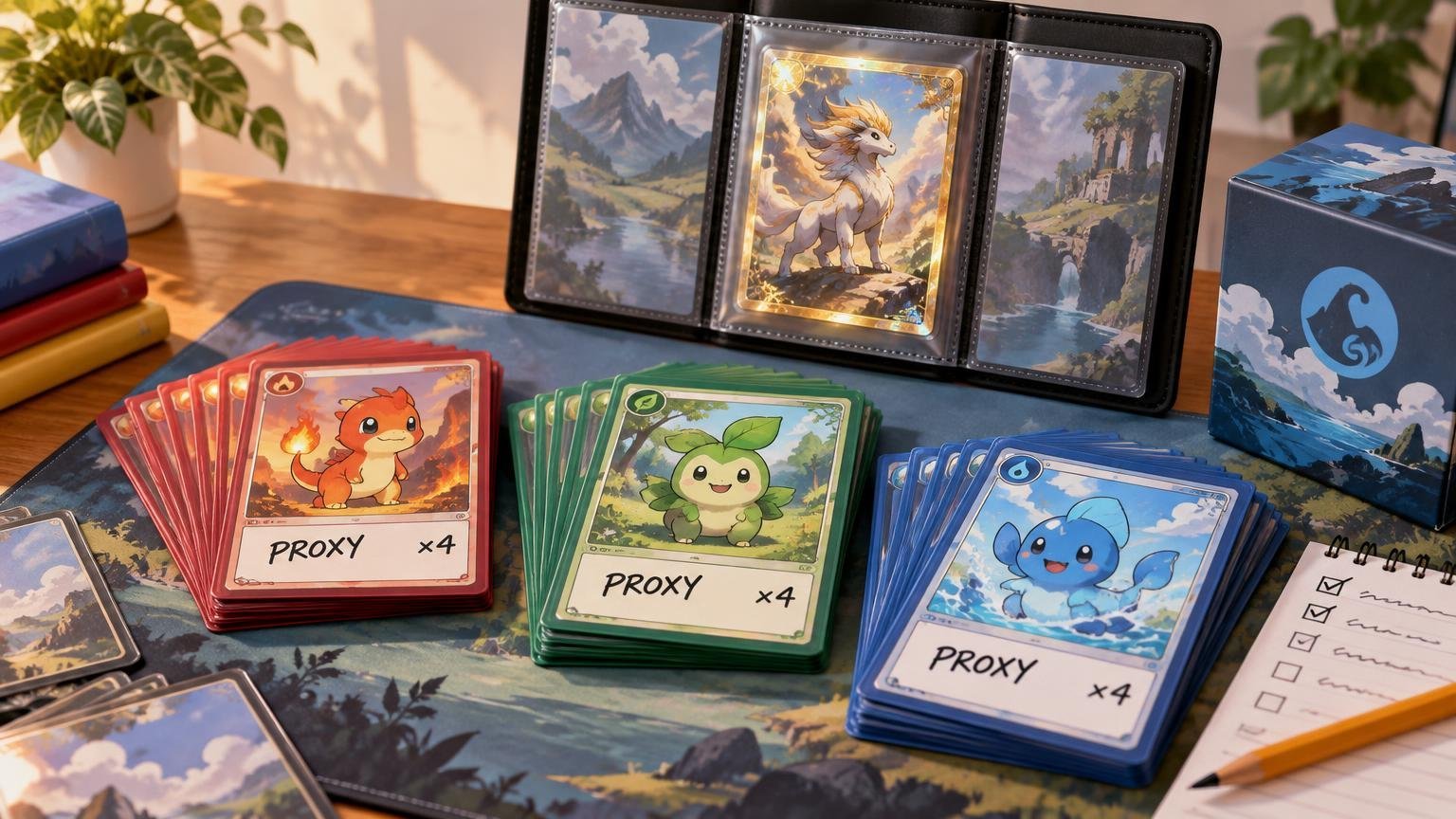
Keep several casual Pokémon TCG decks assembled around one costly card by storing the original safely, marking every substitute, tracking copy counts, and rebuilding properly before sanctioned play.

Opaque matching sleeves can reduce noticeable thickness differences during casual Pokémon TCG testing, but construction, cut quality, sleeve wear, and storage still matter.

Learn how to compare lower-priced and premium Pokémon proxies using observable details such as cut precision, readability, stock, finish, holo execution, consistency, and seller support.
Paper inserts are ideal for rapidly changing Pokémon test decks, while full-card proxies make more sense for stable lists and reusable Cubes. Compare their cost, labor, feel, and sleeve requirements.
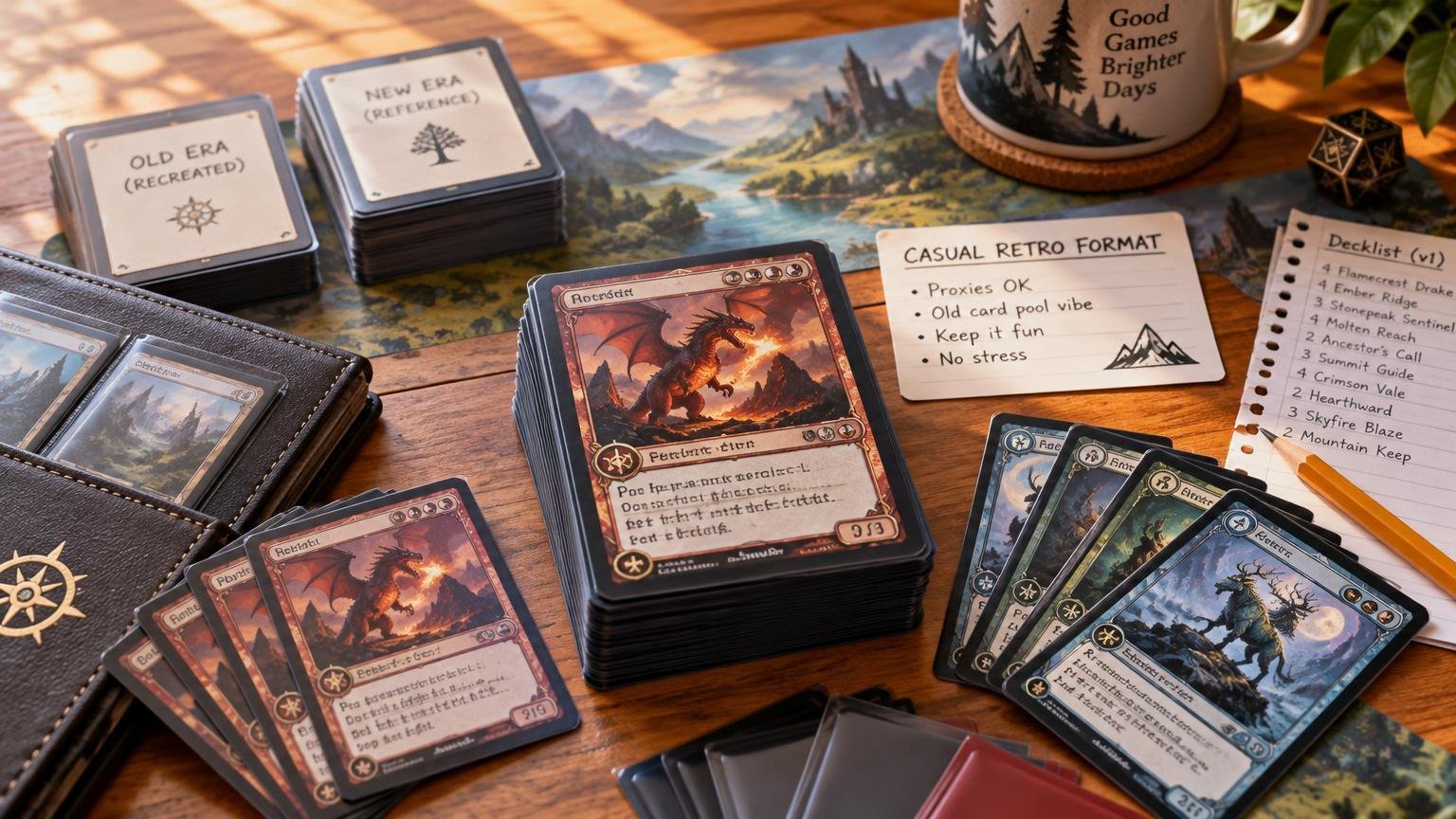
Rebuild a historical Pokémon TCG deck without losing what made it distinctive. This guide covers list verification, card text, era rules, proxy standards and casual-play etiquette.
Do not proxy a card merely because it costs a lot. Use this four-factor framework to identify the costly Pokémon cards, playsets, and engine packages that deserve testing before you buy genuine copies.

TLDR A normal Pokémon deck is built before the game. A Pokémon TCG cube turns that process into part of the game. Instead of showing up with finished decks, players draft cards from a reusable card pool, build decks from what they picked, then play against each other. And unlike a booster draft tied to […]
TLDR A custom card can have excellent art, a convincing frame, and a balanced mana cost, then lose all of that polish with one sentence that does not sound like Magic. Learning how to write MTG rules text is not about making every card sound formal. It is about making the card precise enough that […]
TLDR The difference between a Pokémon proxy vs fake card comes down to one basic question: is anyone being misled? A proxy can be attractive, detailed, holographic, and well made. None of that automatically makes it a counterfeit. The problem begins when an unofficial card is described, priced, traded, or displayed as though it were […]
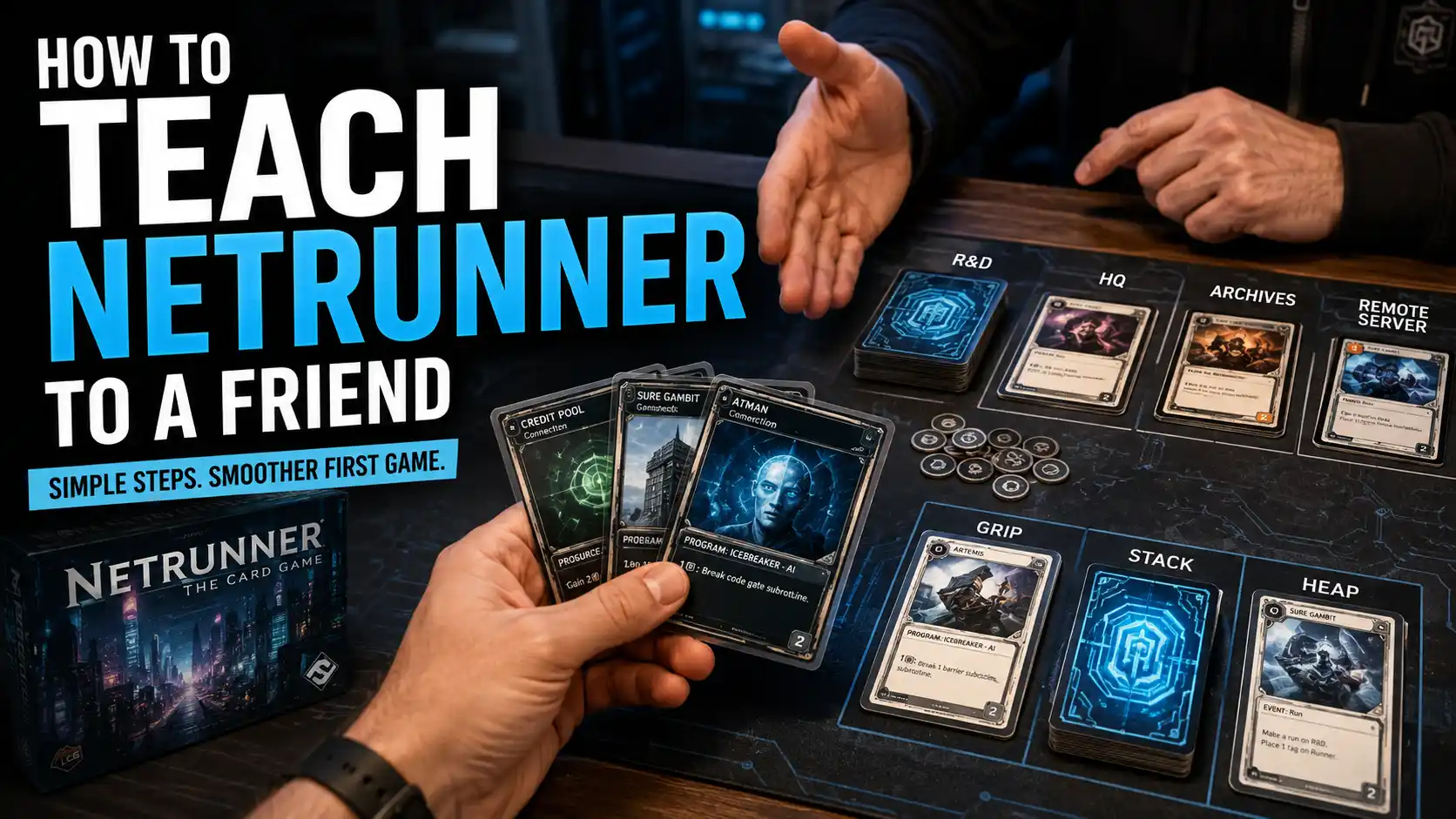
TLDR A bad first teach can make Netrunner feel like homework with card sleeves. A good one makes the game feel like what it actually is: a tense little argument between hidden information, pressure, money, and nerve. That is why learning how to teach Netrunner to a friend matters. The rules are not impossible, but […]
What is summoning sickness in mtg? It is the player term for the rule that stops a creature from attacking or using abilities with the tap symbol the turn it enters or the turn it comes under your control, unless it has haste. The funny part is that players still say “summoning sickness” all the […]
A lot of people only ask how to store pokemon cards after something goes wrong. A binder page warps. A nice holo gets scratched. A stack of cards sits in a hot room too long and starts curling like it is trying to leave the hobby. That is usually when card storage stops sounding boring. […]
For me, pokemon proxy deck testing is one of the fastest ways to figure out whether a deck is actually good or just looks good in a screenshot. That matters more than people admit. A list can seem clean on paper, then completely fall apart once you start drawing awkward hands, missing setup pieces, or […]