
TLDR
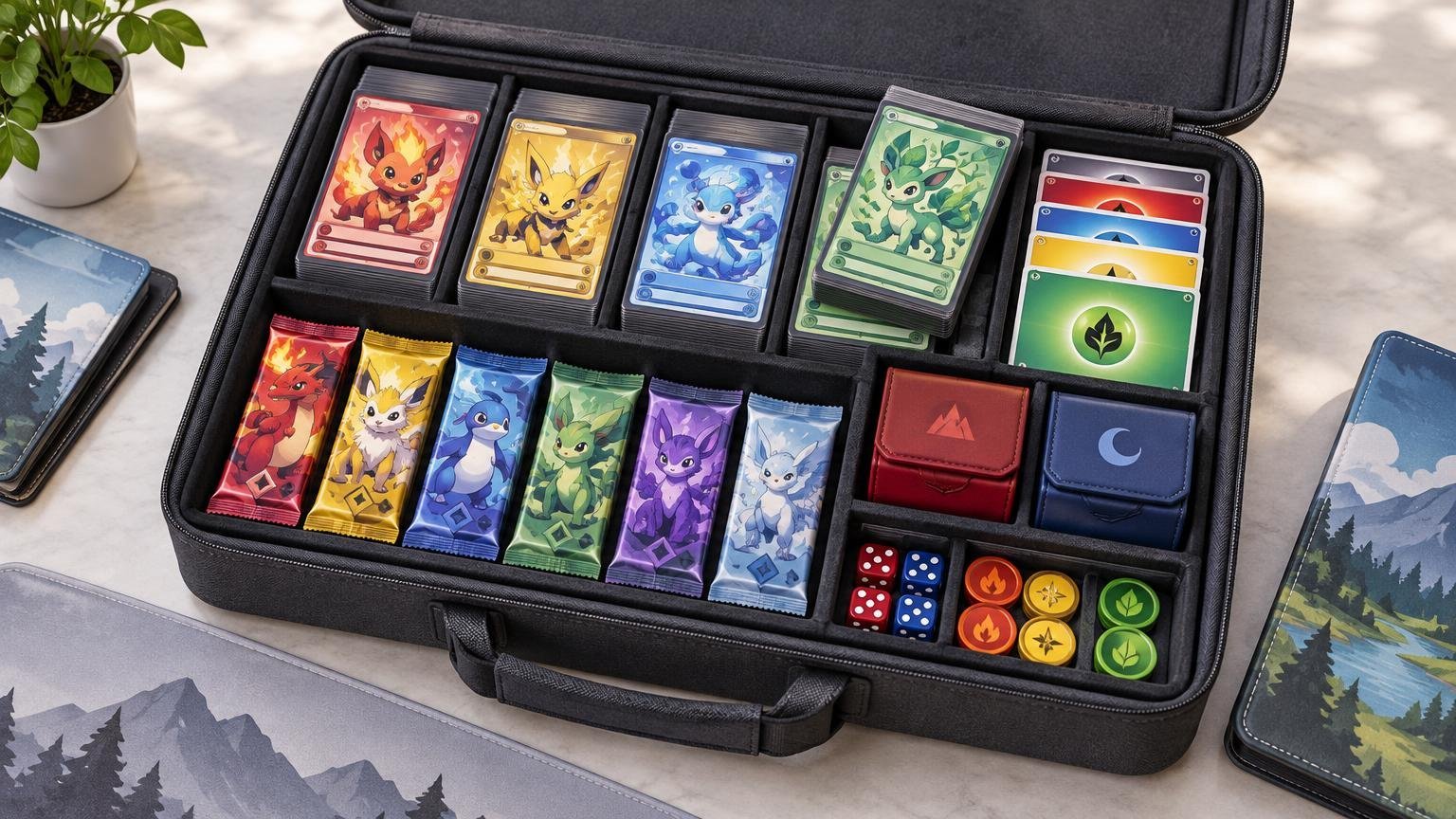
Store a Pokémon TCG Cube as a small game kit, not one enormous stack of cards. Give the sleeved draft pool, Basic Energy, accessories, player deck boxes and rules their own labeled sections. Choose capacity by measuring the finished sleeved stack rather than trusting a box’s advertised card count. Leave enough space to lift cards out without pinching their edges, but not so much that everything can tumble during transport.
Start with the finished sleeved Cube
A Cube can grow far beyond an ordinary deck. The official Pokémon Cube feature says organizers choose the size and notes that Cubes commonly range from 240 to 720 cards. Its detailed Hisui example used 520 cards for eight players, arranged as 40 packs of 13 cards, while a later version reached 540 cards. These are examples, not standardized capacity requirements.
That range makes raw card-count labels unreliable for Pokémon Cube storage. A box advertised for several hundred unsleeved cards may hold substantially fewer cards once you add sleeves, dividers and breathing room. Double-sleeving changes the calculation again.
Sleeve every draftable card first, then place the complete stack beside a ruler or directly into the candidate box. Include the dividers you intend to use. The right container holds the full pool without compression and leaves enough finger space to remove a section cleanly. Cards should remain upright rather than leaning heavily or being forced against the walls.
Use one matching opaque sleeve type and keep every card facing the same direction. This is especially important when authentic cards, custom cards and clearly identified casual-play proxies share the Cube. Consistent sleeves reduce visible differences during drafting, although they do not turn an unofficial card into an authentic one. For more detail on physical consistency, see how sleeve choice affects Pokémon proxies.
Divide the kit into functional zones
The easiest Cube to store is also the easiest Cube to reset. Instead of sorting everything into one dense row, build the box around the order in which components come out at the table.
| Storage zone | What belongs there | Why it helps |
|---|---|---|
| Draft pool | Sleeved cards, loose or in prepared packs | Keeps the reusable card pool distinct from supplies |
| Energy bank | Basic Energy in labeled sections | Lets players reach Energy after drafting without searching |
| Accessories | Dice, counters, coins and condition markers | Prevents hard objects from pressing against card faces |
| Player area | Empty deck boxes or reusable team bags | Separates drafted pools and completed decks |
| Reference pocket | Rules, Cube list and change notes | Makes house rules and reset instructions easy to find |
Use rigid dividers tall enough to see above the sleeves, but avoid tabs that catch when the lid closes. Labels can identify broad sections such as draft pool, Energy and accessories. If you intentionally collate packs, additional dividers for Basic Pokémon, Evolution Pokémon, Trainers, support cards and Special Energy can speed up the reset. Those same categories are useful while tuning the card pool in the broader Pokémon Cube building guide.
Keep Basic Energy outside the draft pool
A practical Cube setup supplies Basic Energy separately so players can add it during deckbuilding. Grass, Fire, Water, Lightning, Psychic, Fighting, Darkness and Metal Energy can each receive a labeled slot or bundled section. Special Energy may remain in the draft pool when selecting it is meant to carry an opportunity cost or support a specific archetype.
Put the Energy bank near the top or front of the container. It will be accessed after every draft, so burying it beneath hundreds of cards creates needless setup friction. If space is tight, use a separate labeled Energy box rather than squeezing more cards into the main row.
Choose loose storage or reusable draft packs
Loose-pool storage is simplest when the entire Cube is shuffled and dealt again before each session. Keep one or more card wells open for the randomized pool, then prepare packs at the table. This approach is flexible, but fully random packs can produce awkward distributions of Basics, Evolution cards and Trainers.
If the Cube uses controlled collation, store prepared bundles behind numbered dividers or in reusable pack containers. A starter structure might use three 15-card packs per player, while other designs can use different pack sizes and draft rules. Pokémon’s Hisui example used 13-card packs and instructed players to draft eight cards while burning the five remaining cards, illustrating how closely storage and reset procedures can depend on the Cube’s rules.
Numbering reusable packs makes missing cards easier to spot, but it can also reveal patterns if the same cards always stay together. Rotate or rebuild the bundles periodically unless fixed collation is part of the design.
Separate hard accessories from cards
Dice, coins, damage counters and condition markers should not rattle directly against sleeved cards. Place them in a small lidded accessory box, zip pouch or separate compartment. Official Pokémon products such as Elite Trainer Boxes include sleeves, dice, counters and dividers, while Battle Academy includes deck boxes, a coin, damage counters and a game board. Those product configurations offer useful examples of treating cards and accessories as separate parts of one portable game kit. Pokémon Support’s product overview Pokémon’s Battle Academy product page
Only pack the accessories your Cube actually uses. A compact kit might need damage counters, condition markers and randomizers. A Cube with house-rule markers, starter Evolution lines or special drafting effects will need clearly labeled extras. Include a short inventory card so the organizer can confirm that everything has returned before closing the box.
Use deck boxes for players, not for the entire Cube
Small deck boxes are useful during an event even when the main Cube lives in a larger container. Give each player a box, reusable bag or labeled tray for drafted cards. It prevents neighboring pools from becoming mixed during deckbuilding and protects completed decks between rounds.
Player boxes should begin empty and return empty after the Cube reset. If each one permanently contains counters or starter cards, label that inventory. Deck boxes organize temporary player pools; they do not replace the main container needed for the shared Cube, Energy bank and accessories.
Pack for transport without overfilling
Before carrying the Cube, fill unused horizontal space with a removable spacer so cards cannot fall flat or slam from end to end. The spacer should stabilize the row without compressing it. Keep accessory containers closed, place written references in a flat pocket and confirm that the lid cannot press on divider tabs.
- Carry the box level and in the orientation intended by its manufacturer.
- Do not leave the Cube in direct sun, a hot vehicle or a damp storage area.
- Replace split or badly stretched sleeves before they become identifiable during a draft.
- Count prepared packs and player boxes before leaving the venue.
- Keep a digital Cube list as a backup for rebuilding or checking the physical pool.
Make the reset part of the storage system
A reusable Cube changes as players identify weak archetypes, stranded Evolution cards and overly dominant picks. Pokémon recommends documenting Cube-specific rules and retaining feedback for later adjustments. Store a printed rule card, current list and brief change log with the physical Cube so an old setup does not accidentally return after an update.
The best Pokémon Cube storage system has an obvious reset sequence: collect player pools, remove Basic Energy, return accessories, rebuild or randomize packs, count the draft pool and record any missing cards. If that process is easy, the Cube is more likely to reach the table again—and less likely to spend its life as an intimidating brick of sleeves at the back of a closet.
References
- Erfahre, wie du einen Pokémon-Sammelkartenspiel-Cube erstellst und Drafts durchführst
- How To Store Pokemon Cards Without Bending, Scratching, Or Fading Them – pokemonproxy.co
- How to Build a Pokémon TCG Cube With Proxy Cards – pokemonproxy.co
- What types of Trading Card Game products are available? – Pokémon Support
- Pokémon Trading Card Game Battle Academy (2024) | Pokemon.com
- www.pokemon.com